For horses
Signals, indications and how a treatment for horses and ponies unfolds.
Equine osteopathy
Osteopathy
Osteopathy is a manual therapy: examining and treating with the hands alone. The goal is surprisingly simple, giving back movement where it was lost.
Osteopathy was developed at the end of the nineteenth century by the American physician A. T. Still. His insight: a body can only function well when all its structures, joints, muscles, connective tissue (fascia), organs and skull, can move freely in relation to one another. What holds true for people applies equally to horses and dogs. The anatomy differs; the principles do not.
A restriction (or ‘blockage’) is reduced mobility of a structure: a joint that no longer glides smoothly, adhered fascia, an organ with limited play in its suspension. The body is a master of compensation, a small restriction may go unnoticed for a long time. But compensating costs energy and loads other areas. An old stumble in a leg can eventually show up as a stiff back, girthiness or a wrong canter lead.
Restrictions can arise from a fall or trauma, one-sided loading, building up young animals too quickly, ill-fitting tack, or persistent tension and stress.
The osteopath examines the whole animal: in stance, in movement and with the hands, layer by layer. Restrictions are treated with gentle techniques, from fascial and craniosacral work to targeted mobilisations. No devices, medication or injections are involved. After the treatment, the body needs time to find a new balance; clear rest and rebuilding advice is always part of the consultation.
Osteopathy and your vet. An animal osteopath does not make veterinary diagnoses and does not replace your veterinarian. Osteopathy is complementary, in case of doubt or acute complaints (colic, fever, wounds), the vet always comes first. Where useful, Jolanda coordinates with your veterinarian.
Read on
Signals, indications and how a treatment for horses and ponies unfolds.
Equine osteopathy
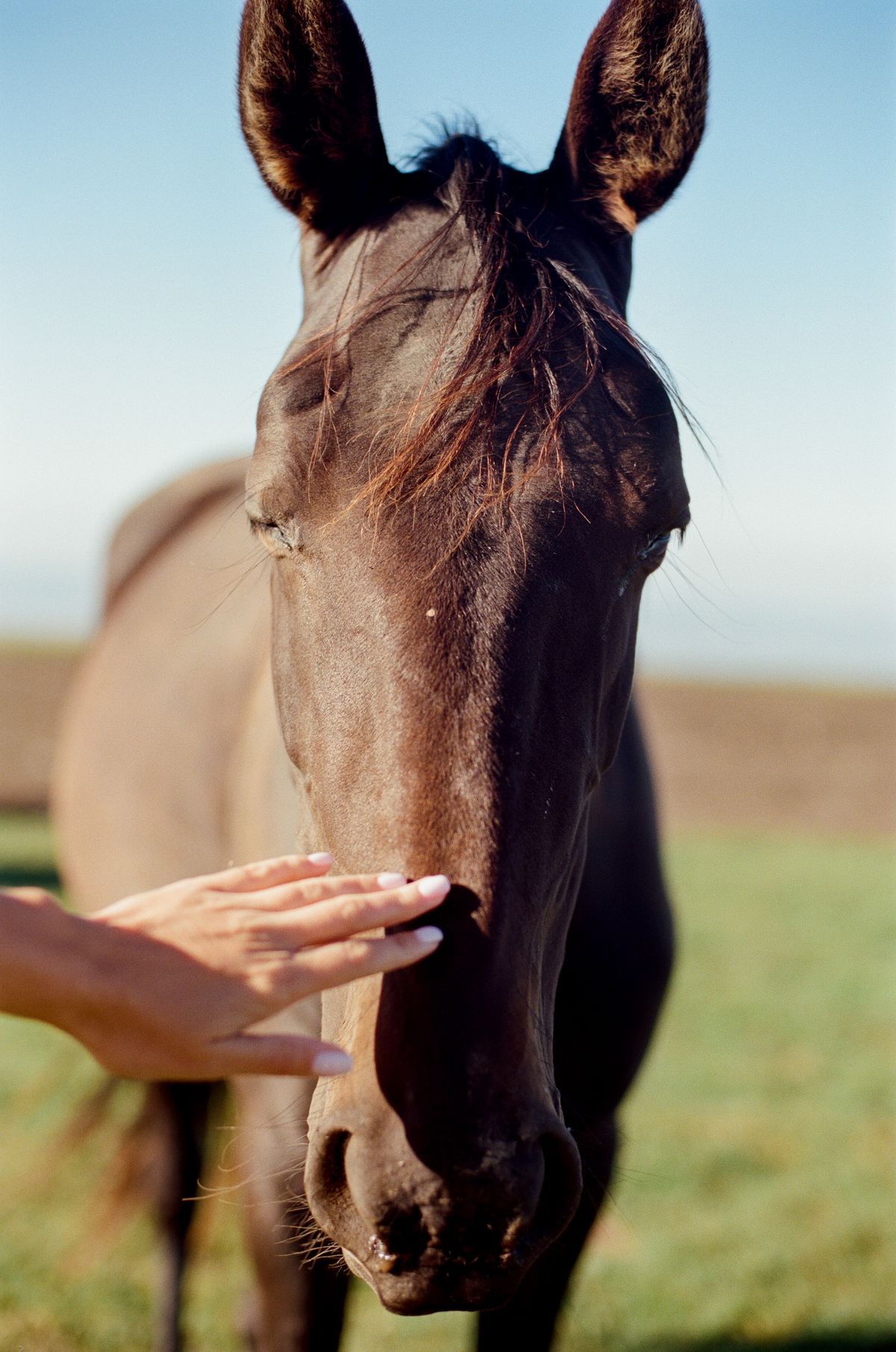
From enquiry to aftercare: how a consultation at De Kronkelbeek works.
See the approach