Approach
Calm, thorough and attentive
No rush, no one-size-fits-all. Every consultation follows the animal, not the other way round. This is the journey, from first contact to aftercare.
Enquiry
You get in touch by email or phone, it takes just a few minutes. Jolanda contacts you to discuss the complaint briefly and plan a visit at your stable or home. Calling or WhatsApp works too, of course.
History: your animal’s story
Every treatment starts with a good conversation. When did the complaints begin? What has been examined, what does the vet say? How is the animal used and kept, what has changed? Old injuries, the saddle, the feed, everything can be a piece of the puzzle.
Full-body examination
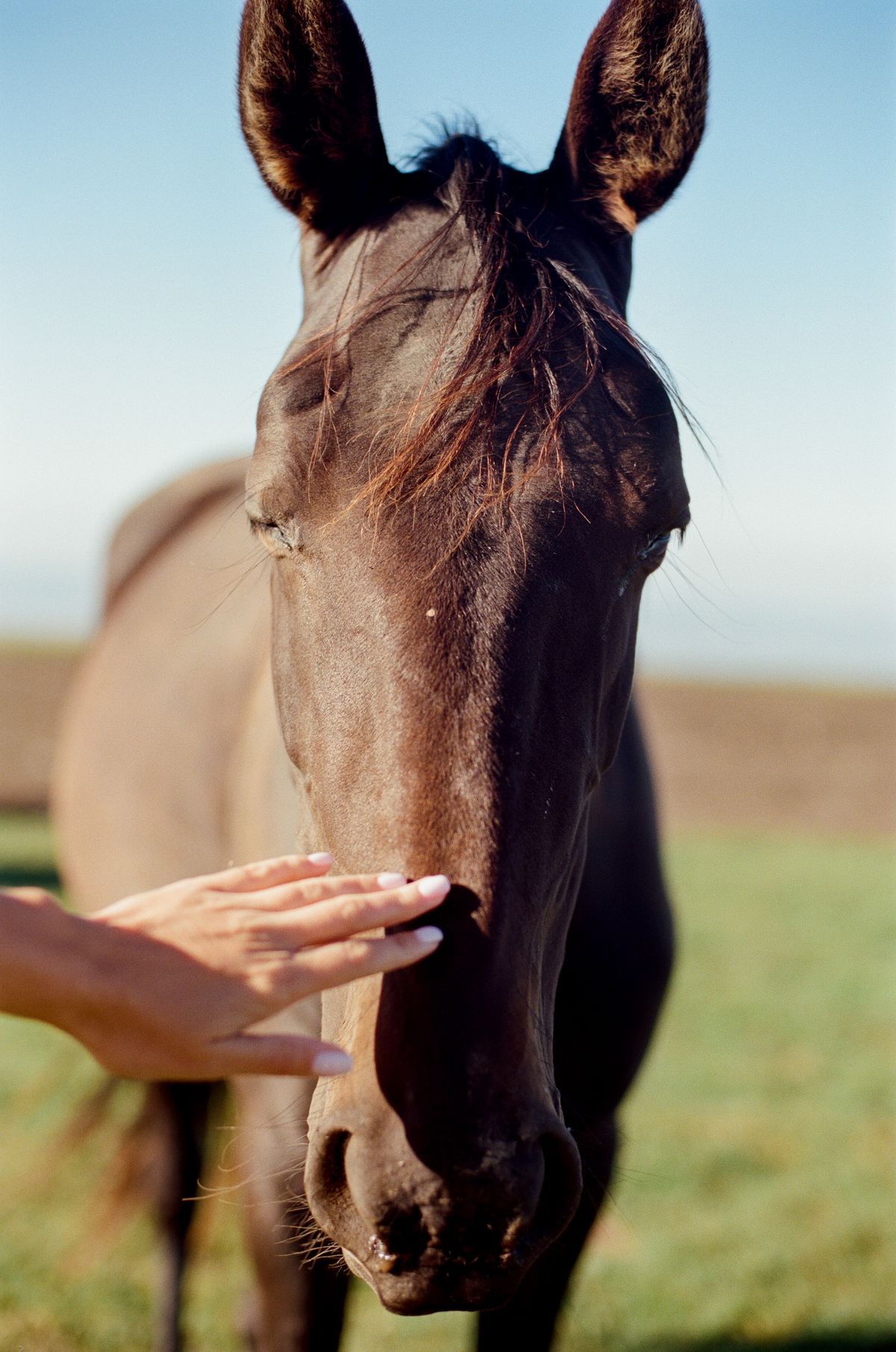
Jolanda first watches your animal in stance and in movement: posture, symmetry, gait. Then comes the hands-on examination, from head to tail. She feels for differences in tension, temperature and mobility and tests joints, tissues and organs. The result is a complete picture: not just of the complaint, but of its cause.
The treatment
Restrictions are treated with gentle, animal-friendly techniques: fascial work, targeted mobilisations, visceral and craniosacral techniques. Hands only, no devices, medication or injections. Where useful, Jolanda adds acupressure.
A consultation usually takes 60–75 minutes for horses and 45–60 minutes for dogs. Most animals visibly relax during treatment.
Advice & aftercare
Afterwards Jolanda discusses her findings with you and gives concrete advice: on rest and rebuilding, training, tack or management. Where useful, she coordinates with your vet, farrier or saddle fitter, together you see more.
Preparation
How to prepare for the visit
For the horse
- Make sure your horse is clean and dry
- A quiet, dry spot with level footing (stable, grooming area or arena)
- Halter and lead rope at hand
- No intensive training right before the appointment
- Allow a good hour without bustle around it
For the dog
- A calm room without too much distraction
- Take your dog out briefly beforehand
- No feeding or wild play right before the visit
- Lead or harness at hand
- Any veterinary reports are welcome
After the treatment
Rest gives the result room
An osteopathic treatment sets something in motion: the body gets to work finding a new balance. That takes energy. Some animals are a little tired for a day or two, or unusually exuberant; mild muscle soreness or temporarily ‘different’ movement can also occur. This is normal and passes by itself.
- Week 1, rest. No training. Free movement in field or paddock is actively good; for dogs, short calm lead walks.
- Week 2, build up quietly. Relaxed, loose work without heavy demands or collection.
- Week 3 onwards, gradually back to normal. Step by step towards the usual training or exercise level.
The treatment keeps working for about six weeks. If a follow-up is needed, Jolanda usually plans it four to six weeks later. One or two treatments often suffice; a preventive check once or twice a year is valuable.
Important: an animal osteopath does not make veterinary diagnoses and does not replace your veterinarian. For acute or serious complaints, colic, fever, wounds, sudden severe lameness, always call your vet first. Pregnant mares are generally not treated in the first months of pregnancy; feel free to discuss.